
With essays by John C. Barnes, David W. Granston III, Jock Herron, and William N.Thorndike, Jr.
Foreword by Earle G. Shettleworth, Jr.
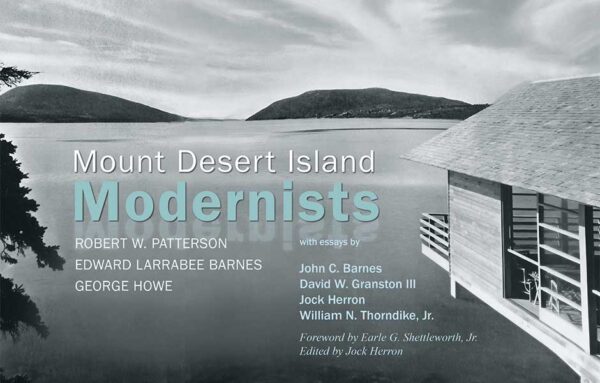
The affinity that artists of many eras and stripes have famously had for the coast of Maine is rightly celebrated and well documented. Less broadly appreciated, architects—and their residential clients—have found the coast of Maine similarly fertile ground for designs that embrace the local landscape and coastal ecologies. Mount Desert Island Modernists: Robert W. Patterson, Edward Larrabee Barnes, and George Howe is a compellingly idiosyncratic account of the influence “place”—in this case Mount Desert Island and environs—had on three gifted architects, two of whom, Barnes and Howe, enjoyed international reputations and a third, Patterson, who was one of Maine’s most influential “citizen architects.”
Short essays on the three—Patterson by Will Thorndike; Barnes by his son John; and Howe by Jock Herron—are insightfully framed by a foreword from Maine’s leading architectural historian, Earle Shettleworth, Jr., and a contextual essay by architectural historian, Willie Granston, who links the work of the modernists with earlier architecture on the island. As text alone rarely does justice to the experience of architecture, the book is illuminated by images—photographs, drawings, ephemera—that amplify each essay.
Working in coastal Maine, architects need to recalibrate with honesty of expression and harmony with nature. There is a benign beauty and informality and comfort that imbue all of the three architects work. New England vernacular meets modernist style, sharing lucidity and restraint while opening up to the dramatic views and spectacular landscape of Mount Desert Island. —Toshiko Mori, the Robert P. Hubbard Professor in the Practice of Architecture at the Harvard Graduate School of Design
Nestled into the spruce forests and pink granite of Mount Desert Island are modernist structures built with native materials that embrace the landscape as if they’d sprouted naturally from the mycelium threads that produce our beloved summer mushrooms. Only they didn’t sprout. These architectural gems were designed by Bob Patterson, Ed Barnes and George Howe to celebrate this unique island. A very engaging account. —Jim Sterba, author of Nature Wars: The Incredible Story of How Wildlife Comebacks Turned Backyards into Battlegrounds and Frankie’s Place: A Love Story
What a pleasure this book provides—smart, thoughtful essays on three architects whose work is part of the continuing tradition of distinguished design on Mount Desert Island. I was fascinated to learn about the antecedents and influences that inform the buildings by Patterson, Barnes, and Howe—buildings I have seen and admired, or simply heard about, for years, but which I had not known enough about until now. This is a lively, bracing, and invigorating book that reminds us of the natural delights of the Island, and the architects who have incorporated those delights into their designs. —Roxana Robinson, author of Leaving, a NY Times Editors’ Choice
Reviews
There are no reviews yet.